Fire doors are vital components of a building‘’s fire safety measures, designed to contain and delay the spread of fire and smoke, allowing occupants time to evacuate.
Their effectiveness relies on their fire resistance rating—such as FD30 or FD60—which ensures compliance with British Standards like BS 9999 and BS 8214.
However, to ensure their effectiveness, they must be properly maintained and inspected regularly.
This article explores how often fire door inspections should take place, why inspections are essential, and the roles of key individuals in maintaining these life-saving systems, with recommendations based on best practice guidance.
Click here, call 0113 279 5854 or email info@yeomanshield.com no matter where in the UK you are based, so we can help with your fire door inspections and keep you safe.
Fire doors play a critical role in a building’s passive fire protection system. They work alongside escape doors and fire safety strategy measures to safeguard lives. These specially designed doors are built to:
To fulfil these roles, fire doors and all their components—including seals, hinges, and signage—must be fitted correctly to maintain their fire resistance and compliance.
They must also be correctly installed, adequately maintained, and regularly inspected.
Under the Regulatory Reform (Fire Safety) Order 2005, fire doors must be subject to regular formal inspections. These being separate from your own basic safety checks. Current guidance suggests:
These routine fire door checks ensure issues such as missing screws, damaged door leaves, or faulty closing mechanisms are identified early.
The frequency of fire door inspections depends on the building type and usage.
According to the Regulatory Reform (Fire Safety) Order 2005, inspections should align with the building’s overall fire risk assessment.
Practice guidance, including British Standard BS 9999, provides recommended intervals for fire door inspections to ensure compliance and safety.
Monthly visual inspections are a form of basic visual checks, which are essential for early detection of obvious damage, faults, or misuse. Depending on the building’s fire risk assessment, these basic visual checks may be conducted weekly or monthly. On-site staff should perform these checks to identify any issues between formal inspections, helping to maintain fire door integrity and compliance.
Formal inspections are distinct from basic visual checks and should be carried out by a competent, trained person at scheduled intervals.
For high-rise residential buildings over 11 metres, the Fire Safety (England) Regulations 2022 require responsible persons to conduct quarterly checks of all communal fire doors and annual checks of flat entrance doors.
The Fire Safety Act 2021 clarified that flat entrance doors must be included in the fire risk assessment mandated by the Fire Safety Order, ensuring they meet current legislative standards.
Commercial buildings, schools, and hospitals should have formal inspections at least every six months to ensure compliance and functionality, with high-traffic areas such as schools and hospitals potentially requiring quarterly or even monthly checks due to accelerated wear and tear.
The British Woodworking Federation recommends that fire doors should be inspected at least every six months to ensure they are functioning correctly.
The frequency of formal inspections generally falls between 3 to 12 months, depending on building type and risk assessment.
Communal fire doors and individual flats in high-rise residential buildings have specific inspection requirements, with communal doors inspected at least every 3 months and flat entrance doors checked at least every 12 months, as required by current regulations and best practice guidance.
In most buildings, responsible persons, such as the building manager or building owner, should conduct regular fire door inspections at least once a month as part of basic visual checks.
Regular informal spot checks are recommended by safety bodies, including the London Fire Brigade.
On-site staff should perform these simple visual checks between formal inspections to identify any obvious damage or misuse.
Regular visual checks of fire doors should be conducted weekly or monthly, depending on the building’s fire risk assessment, to catch obvious damage or faults before formal inspections.
These inspections check for signs of damage or wear, ensuring the doors remain functional.
The responsible person, often the building owner or managing agent, has a legal requirement to ensure fire doors are inspected and maintained.
This applies across domestic premises, non-domestic buildings, and relevant buildings covered by the Fire Safety England regulations and Safety England Regulations 2022.
A sufficient fire risk assessment must include fire door checks as part of wider fire safety measures.
Routine inspections focus on ensuring fire doors:
Faults such as warped doors, broken door closers, or damaged seals can seriously compromise fire door safety.
Fire doors should be inspected by a competent person with knowledge of fire door regulations, building regulations, and fire safety laws.
Detailed inspections should produce detailed reports, supporting compliance and demonstrating ongoing fire door maintenance.
This is why we suggest getting in touch with us at Yeoman Shield to ensure the inspections have been thorough.
A fire door inspection is essential for many reasons.
Regular inspections are crucial because even minor damage or improper maintenance can significantly reduce the effectiveness of fire doors in an emergency, potentially endangering lives and property.
It is important to maintain fire doors and related fire safety equipment in good repair to comply with legislation such as the Fire Safety Order 2005 and to ensure the safety of building occupants.
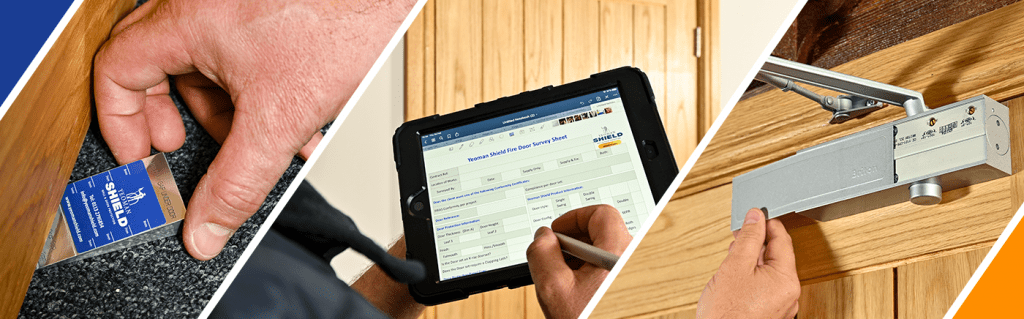
During a fire door inspection, the following components are checked to ensure they are functioning correctly:
In high-rise buildings, residential buildings, and premises with shared escape routes, fire doors should be inspected more frequently due to a higher risk. Guidance from the London Fire Brigade reinforces the importance of regular checks to ensure doors withstand fire and protect escape routes.
Failure to inspect and maintain fire doors can result in:
Fire doors play a critical role in overall fire safety, and inspections are not optional – they are essential.
To learn more about fire door inspections, click here, call 0113 279 5854 or email info@yeomanshield.com.