


Fire safety has always been a cause for serious concern for both domestic living spaces and commercial premises.
By following the rules and regulations set by the Fire Safety Order 2005, it is possible to give yourself the best chance of applying effective fire safety measures to your premises.
Understanding that fire safety regulations are more than just a legal obligation is an exceptional starting point. After all, every single decision you make as the building manager, owner, or responsible person can have a major impact on the safety of yourself and others. And, the number one decision to be made is regarding your fire doors.
Here’s a look at the rules for fire door compliance in the UK, providing a comprehensive guide for businesses to ensure they know what they need to do.
Click here, call 0113 279 5854, or email info@yeomanshield.com to speak to our expert team at Yeoman Shield about fire doors.
Fire doors are your first line of defence against a raging fire. These doors are specially designed to resist fire and provide an effective barrier against it spreading quickly within a building.
Both internal and external fire doors are a key part of building fire safety, protecting escape routes and allowing safe evacuation of all the lives located within the building at the time.
Properly installed fire doors include:
Every single feature mentioned works in tandem to give people the best chance of escaping danger. These are compulsory elements to meet regulatory reform fire safety standards. Think of it more like having an airbag in your car rather than deciding on whether you should consider a cup holder or not.
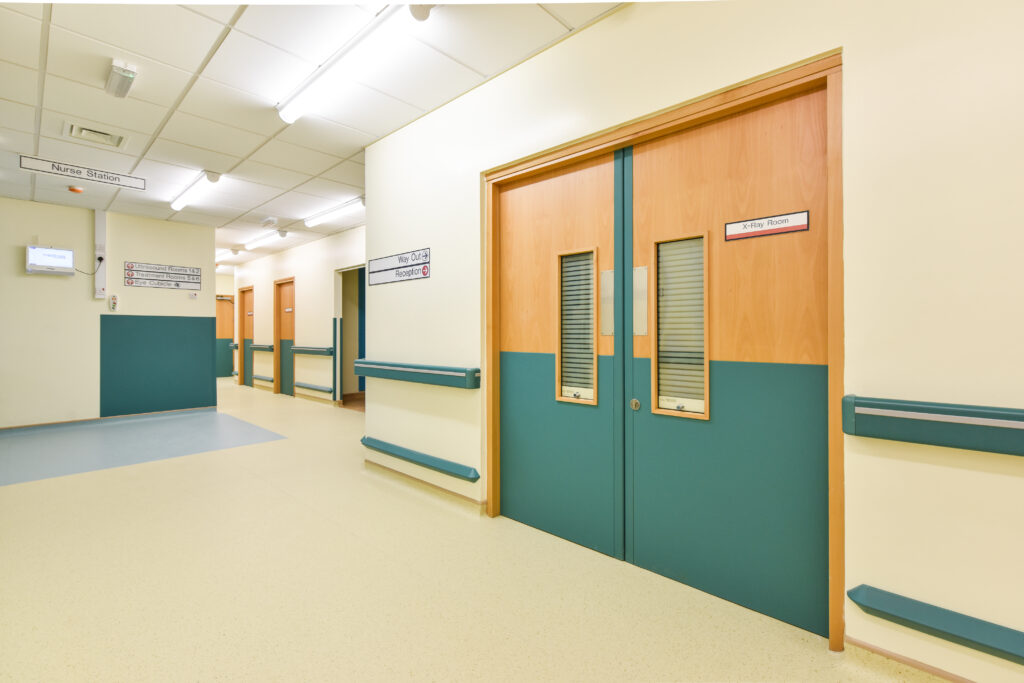
Understanding fire door regulations in the UK is essential for any business. Fire doors must comply with building regulations, including the Regulatory Reform (Fire Safety) Order 2005.
These fire safety regulations apply to:
Fire safety compliance has always been important, especially in buildings occupied by many people or businesses with many users. Every regulation, whether it be for fire doors, extinguishers, or alarms, etc., is put in place to reduce overall fire risk.
Full fire door inspections are an annual requirement, like an MOT for your car, or insurance for an appliance. Your fire doors need to be inspected by professionals to determine if there is any damage or wear to the seals and hinges, the self-closing mechanism, or the body.
Professional fire door inspections are the only way to determine if your fire doors have remained fully operational or require fixing immediately before it is too late.
During the year, the responsible person can do their checks and log all the information in accordance, which is a great part of fire safety compliance.
Ultimately, these routine checks and the annual inspection are major necessities for fire risk assessment.
Here’s a simple checklist which can aid you with your fire door inspections.
Make sure to:
In all honesty, it does not require a lot of time and effort to ensure fire door compliance. With everything you inspect, it is vital that you keep clear records as proof of the good work the responsible person has been doing. These records help as proof of compliance during fire inspections.
As you can imagine, there isn’t a viable answer to this question. Reputable companies will take into account the number of fire doors you have, the size of the building, and whether or not you want other things checked, too.
It’s best to speak to the experts about your requirements, who will then give you an accurate price based on the information you provide.
Fire door maintenance is the natural next step after inspecting them. Naturally, you will figure out what is below standard during your inspection, and you must then repair those existing issues as quickly as possible.
If ever unsure, you must ask yourself:
If the answer to any of these questions is “no”, then you need to ensure the answer changes through maintenance. Ongoing fire door maintenance is essential for fire safety measures to remain effective.
If your fire doors aren’t properly maintained, they will be less effective during a fire, which could be catastrophic for both damage to the building and the loss of life.
Fire door installation is another aspect of fire door compliance that is taken very seriously. It goes without saying that if fire doors, just like everything else, are not installed correctly, they will be no better than putting a random obstacle in front of a fire.
This is why it is essential to ensure you do the following when installing fire doors:
We strongly recommend that fire door installations be done by trained professionals with years of experience in the industry. For something so important, you can’t just “do it yourself” if you’re not trained to do so.
This is a very important question that is very easy to understand.
In simple terms, B-Class fire doors are typically able to withstand fire for around 30 minutes or so, and are located in areas that have a lower risk of fire. These are your most common types of fire doors, usually found in hallways, schools, and offices.
These doors are a minimum expectation nowadays, and are made from approved non-combustible materials, often with insulation to prevent excessive heat transfer.
Yes, there are also class A and C fire doors available.
The latter is for normal use as it does not offer any sort of fire resistance whatsoever. It is mostly used as a barrier against smoke, so that it doesn’t spread around the area quickly.
A-class fire doors, on the other hand, are usually made from steel (or similar material) to ensure the best chance for people to escape. These doors are able to resist fire for up to 60 minutes, making them a valuable asset in high-risk areas such as kitchens, labs, and other similar locations.
How long fire doors can withstand a fire is collectively referred to as their fire door ratings. Please make sure to select the correct fire doors based on the regulations.
The responsible person, often building owners or property managers, has a legal duty under the Reform Fire Safety Order 2005 to ensure that fire safety regulations are fully met within the premises.
Their legal responsibility includes:
The jobs of the responsible do not differ depending on the building they own. If anything, they are pretty much the same based on building regulations. The only difference is the number of responsible persons and how often fire doors are checked, based on the size and purpose of your building.
Fire performance is essential to having compliant fire doors. However, we have come across many cases where non-compliance can come down to simple but serious issues.
Common failures with fire doors include:
Such errors, although they may feel like nothing, can lead to increased fire spread and compromised safety.
Ignoring fire door safety regulations can have serious consequences for you, your business or premises, and the occupants or staff that use it.
Some of the consequences of non-compliance could include:
Beyond financial impact, failure to comply puts lives at risk. All because the responsible person didn’t follow fire safety compliance regulations.
As much as you can do as a building owner, there are many occasions in which you need to involve experts for full fire door compliance.
Hire trained professionals when:
Any situation where the fire door work is more than simple checks and maintenance, it is vital to seek specialist help from a reputable company.
By working with specialists, you can ensure your building meets all fire door requirements and remains compliant. Plus, people who are fully trained in fire doors and overall fire safety can provide certification for your records, which can be helpful in providing you and all other users of the building with peace of mind.
So, we cannot stress enough the importance of understanding that fire door compliance in the UK is essential for all business and commercial premises. Every single step of fire door compliance is equally important, from installation to inspection, maintenance to keeping records.
By following regulations, carrying out regular fire risk assessments, and working with professionals, you can ensure your building meets all fire safety measures and remains safe for everyone inside.
For further information on fire door compliance or to get help from our specialists, click here, call 0113 279 5854, or email info@yeomanshield.com today!